

Best Used Ford Trucks for Towing: F-150, Super Duty, and Ranger Strengths Compared
Matching the right used Ford truck to the right towing job matters more than most buyers realize before they start shopping. The Ranger handles light-duty midsize work, the F-150 covers the broad middle ground, and the Super Duty handles heavy commercial loads. Knowing where each model fits keeps you from overspending on more truck than you need, or from buying something that leaves you underpowered on the highway.
Matching Your Towing Needs to the Right Used Ford Truck
Get honest about what you’re actually hauling before comparing models. A weekend camper and a loaded equipment trailer require very different trucks, and the right answer depends on load weight and how often you’ll be pulling it.
The three core models worth considering in the used market are the Ranger, the F-150, and the Super Duty. Each occupies a distinct tier of capability. Getting that match right from the start separates a truck that performs for years from one that constantly feels underpowered or oversized.
Ford Ranger: The Right-Sized Used Truck for Light-Duty Towing
The Ranger earns its place for buyers who don’t need more than a capable midsize hauler. It fits in tighter spaces than a full-size truck and delivers enough towing muscle for smaller recreational and utility tasks. Focus on 2019-and-newer examples, which represent the post-relaunch generation with meaningfully updated capability.
Engine Choice: 2.3L vs. 2.7L Towing Capacity
Engine choice in a used Ranger affects performance, but not maximum tow rating the way many buyers assume. The standard 2.3L I-4 EcoBoost, when properly equipped with the Trailer Tow Package, is rated up to 7,500 lbs. The 2.7L V6 EcoBoost, when similarly equipped, carries the same 7,500 lb maximum rating.
The difference between them is not capacity but how they deliver it: the 2.7L produces more torque and does so lower in the rev range, which generally means more relaxed pulling, less strain under load, and steadier performance on grades or at highway speed when hauling small boats, PWCs, utility trailers, or lightweight campers.
If towing is a priority, either engine can reach 7,500 lbs with the Trailer Tow Package present, but the 2.7L offers a more comfortable towing experience at that weight.
Who the Ranger Actually Serves Best
The Ranger suits first-time truck owners and buyers who want reasonable fuel efficiency alongside moderate towing capability. Its smaller footprint makes it more practical for daily driving than a full-size alternative. If your hauling needs are consistent but not extreme, it’s one of the better used midsize options available.
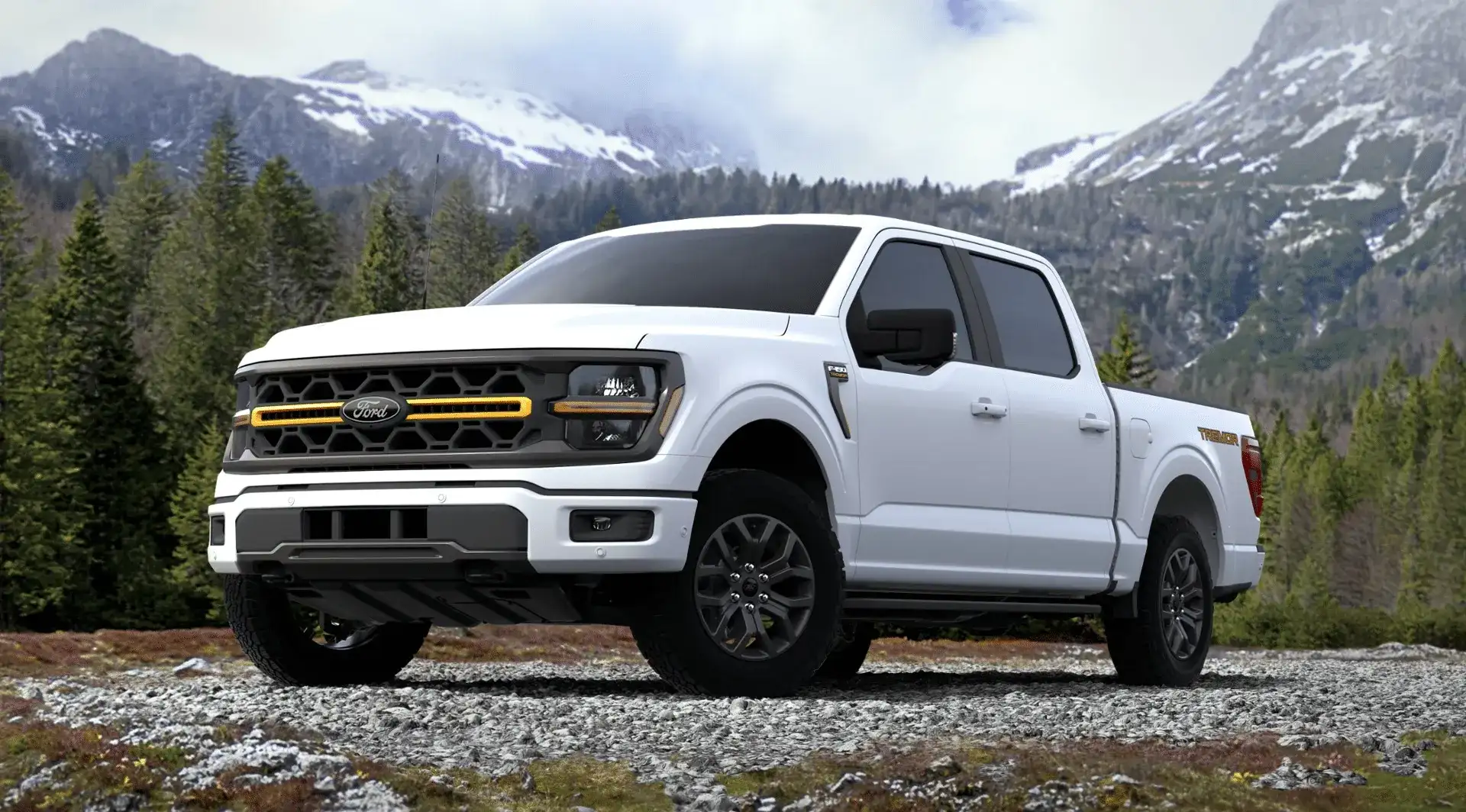
Ford F-150: Versatile Towing for Everyday Haulers
The F-150 sits at the center of Ford’s truck lineup for good reason. It’s one of the most configurable trucks on the market, and the used market for 13th-gen (2015-2020) and 14th-gen (2021+) examples is deep. Whether you’re towing a boat on weekends or hauling equipment for a small business, the F-150 handles both without asking you to compromise.
Engine Options and Max Tow Package: What to Look For
When properly equipped with the Max Tow Package, the F-150 can tow up to 13,500 lbs. That number requires the right engine, axle ratio, and factory towing hardware to be meaningful. The 3.5L EcoBoost V6 is widely regarded as the strongest performer in the lineup for regular towing. The 5.0L V8 is a legitimate alternative, particularly for buyers who prefer naturally aspirated power and want more predictable behavior under load in heat or altitude. The EcoBoost engines deliver strong numbers, but used buyers should know that the 6R80 transmission can experience heat soak under sustained heavy towing, making a functional transmission cooler a key item to verify.
Confirm whether the Max Tow Package is present. This includes an upgraded hitch receiver, integrated trailer brake controller, upgraded mirrors, and reinforced cooling. A used F-150 without it may fall short of its model year’s published towing figures regardless of engine.
Where the F-150 Shines
Pontoon boats, travel trailers, and mid-size campers are all well within the F-150’s comfort zone depending on configuration. It also manages to feel like a capable daily driver when it’s not working, which matters for buyers who want one truck to handle everything. If you’re ready to explore your options, you can start your financing application before you visit.
Ford Super Duty: When the Job Demands Heavy-Duty Capability
When towing capacity is the entire point, the Super Duty changes the conversation. Post-2017 generations of the F-250, F-350, and F-450 ride on heavier frames with reinforced suspension and drivetrain components built for loads that would push an F-150 to its limits.
F-250 vs. F-350 vs. F-450: Choosing the Right Variant
Each Super Duty variant occupies a specific tier. The F-250 handles up to around 22,000 lbs for larger fifth wheels, horse trailers, and heavy work equipment. The F-350 raises the ceiling further for larger commercial and recreational loads. The F-450 tops out at up to 40,000 lbs, built for demanding commercial or agricultural applications.
Choosing between them comes down to peak load weight. If you’re routinely towing near your truck’s capacity, moving up a tier is a smart investment in long-term durability.
Gas vs. Power Stroke Diesel: Used Buyer Tradeoffs
The 6.7L Power Stroke diesel is the choice for sustained heavy towing and long-distance hauling. It produces high torque at low RPMs and holds up well over high mileage when properly maintained. Used buyers should ask for diesel service records and factor in higher maintenance costs. The gas-powered Super Duty, typically equipped with the 6.2L or 7.3L V8, is simpler and cheaper to maintain and still capable of handling substantial loads. For buyers who tow heavy occasionally rather than daily, a well-maintained gas Super Duty offers strong value without the diesel premium.
Understanding Payload vs. Towing Capacity
This distinction trips up a lot of buyers. A truck’s towing rating assumes a specific GVWR, and once you account for passengers, bed cargo, and trailer tongue weight, available payload shrinks fast. A used F-150 rated for 13,000-plus lbs of towing can be payload-limited to a much smaller trailer in practice depending on how it’s loaded. Always check the payload sticker and run the numbers before assuming max towing capacity is achievable in real-world conditions.
What to Verify Before Buying a Used Ford Truck for Towing
Never rely on the model year’s advertised maximum towing figure. Check the door jamb sticker and use the Ford VIN decoder or original window sticker to confirm the actual tow package and axle ratio installed on that specific truck. This is the only way to know what the truck was actually built to handle.
Check for signs of heavy-use wear as well. On used F-150s, verify the trailer brake controller works, inspect the hitch receiver area for frame corrosion, and confirm the transmission cooler is adequate. On Super Duty trucks, check front axle U-joint condition, look closely for frame and hitch receiver corrosion, and review the history for prior commercial or heavy towing use. A pre-purchase inspection by a qualified technician is worth every dollar when towing performance is the reason for the purchase.
Find the Right Used Ford Truck at Stivers of Troy
When you’re ready to find a used Ford truck built to pull, we carry configurations across the Ranger, F-150, and Super Duty. We help buyers in and around Troy, AL match real towing needs to the right truck, not just the most impressive spec sheet.
Contact our team in Troy, AL to schedule a test drive or get guidance on which configuration makes sense for your specific hauling needs.
Images by OEM
0 comment(s) so far on Best Used Ford Trucks for Towing: F-150, Super Duty, and Ranger Strengths Compared